
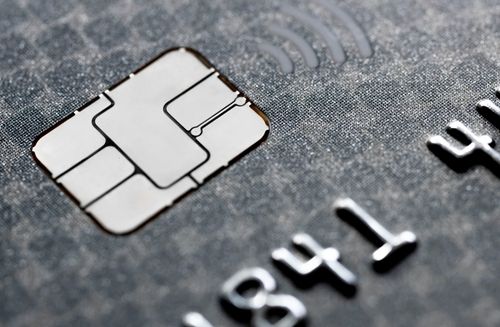
EMV Chip kicked off as a globally accorded standard, enabling interactions between computer chip cards and terminals used by major financial organizations. Now, it represents a worldwide adopted technology that facilitates safe payment in both direct and remote settings. EMV is an abbreviation for Europay, Mastercard, and Visa.
EMVCo, a global technical entity, currently manages the standard. It promotes global interoperability and acceptance of secure payment transactions by supervising and enhancing the EMV Specifications and connected testing processes. EMV-aligned point-of-sale (POS) terminals generally necessitate that the cardholder uses a personal identification number (PIN) rather than a signature, offering an extra layer of security protection.
EMV cards are embedded with a circuit chip that encodes each transaction distinctly, making reproduction of data from a chip card’s transaction by a criminal for another purchase impossible. In contrast, the past dependency on magnetic strip for credit and debit cards did not offer an equivalent level of security, making the cardholder's private information vulnerable to criminal activities.
The chip-based solutions that companies began developing in the 1990s were initially complicated by a lack of uniform standards and interoperability issues. However, EMVCo's establishment in 1999 provided a clear and universal framework for using chip technology in cards and payments. This led to the widespread adoption of this more secure technology. EMV chip technology made counterfeiting and faking transactions extremely difficult.
Even though U.S. card issuers were slow in adopting EMV Specifications initially, high-profile data breaches and a surge in identity theft eventually caused a shift towards the use of EMV. After their introduction, EMV-equipped chip cards soon became popular worldwide, with almost 13 billion of such payment cards currently in existence. Despite this, they have limitations in safeguarding online transactions, necessitating the evolution of EMV Specifications to include card-not-present payments.
It's also crucial to realize that the effectiveness of EMV technology relies on the robustness of the merchant payment processing systems in which it's applied. Merchants using weak encryption on their POS terminals are still putting payment data at risk.
Finally, an emergent trend among EMV card users is the growing use of near-field communication (NFC) technology to enable contactless payments. This additional feature increases transaction security. Therefore, EMVCo plays a significant role in strengthening transaction security globally by permitting diverse systems to function collectively while protecting sensitive customer information.