
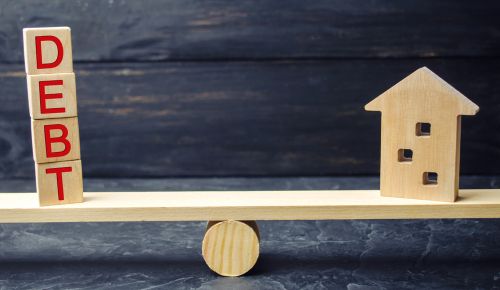
Underwater mortgages are situations where homeowners owe more on their mortgage than the current market worth of their property. It happens when housing prices fall dramatically, making it challenging for homeowners to sell or refinance their home without taking a significant financial hit. Underwater mortgages became prevalent during the 2007-2008 financial crisis due to the sharp decline in home prices and questionable lending practices.
The amount owed on the mortgage becomes more than the home's value when the principal of the original mortgage remains higher than the property’s current market value. Hence, if you have a $250,000 mortgage and the value of your home dips to $225,000, your mortgage is underwater. However, if you've managed to pay down the principal to $125,000, you would still have $100,000 in positive equity despite the decrease in property value.
The 2008 financial crisis caused a massive decline in property values as risky lending practices, especially to subprime borrowers, led to a high number of defaults and foreclosures. This had a negative impact on real estate property values across the U.S market, leading to losses for borrowers whose mortgage values exceeded their homes’ fair market price.
The intervention of the Federal Reserve via implementing monetary policies played a crucial role in helping the economy recover, lowering interest rates, and subsequently leading to an increased demand for real estate. Newer initiatives from the Dodd-Frank legislation are also improving mortgage lending standards, significantly reducing the likelihood of witnessing another real estate crash like in 2008.
Nevertheless, to safeguard against potential risks associated with underwater mortgages, homeowners need to be vigilant about market trends and keep a check on their property's value. Regular appraisal of their property value can help in this regard, and maintaining their property's value through regular renovations and community involvement can also have a positive impact.
If faced with an underwater mortgage, homeowners can consider options including refinancing, loan modification, negotiating short sales with the lender, or holding off till the market improves. They could also potentially stop making payments, but this could lead to foreclosure and severely impact their credit score. Seeking advice from a financial advisor can be beneficial in managing the complexities of an underwater mortgage.